You are heading to a birthday party of a good acquaintance. As a gift, you bring along a delightful bottle of wine, one that you personally enjoy on special occasions. […]
Lees meer >
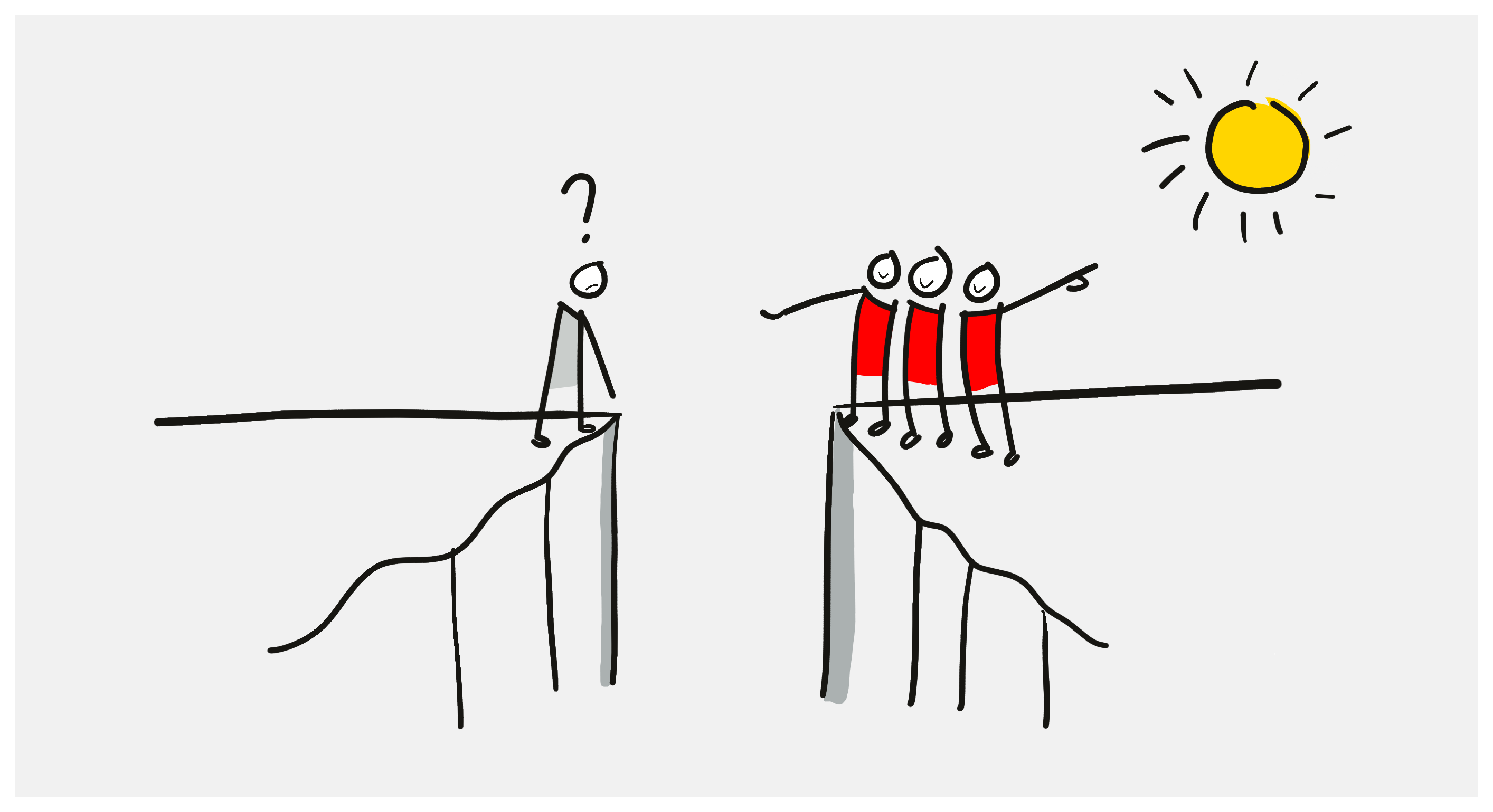
In our training sessions, participants want to learn how to open their presentations strongly. We often hear: “I want my audience to be on the edge of their seats right from the start!” However, in practice, it is not that easy: many presentations begin with lengthy theoretical explanations or a slew of boring facts about the speaker’s organization.
So, how should it be done? It is a good idea to present a problem your audience struggles with or an opportunity they would like to seize in the opening of your presentation. But how exactly do you do that, and when do you use which approach?
Here is how to start a presentation powerfully:
With a problem-oriented approach, you confront your audience with a recognizable problem. For example, to a group of mechanics, you might open with: “When you have to fix an internet outage for a customer, it is often the case that the customer is angrily waiting for you. Have you ever experienced that?” Or to a soccer club’s board of directors: “Season ticket holders are essential for the club’s continuity. However, over the last three years, the number of season ticket holders has declined by over 10% per year.”
But you can also present the same introduction as an opportunity: a situation in the future that your audience would like to achieve. With the mechanics, you could also start with: “When you have to fix an internet outage for a customer, you work most efficiently and quickly when the customer cooperates well with you.” And to the soccer administrators, you could also open with: “For every soccer club, season ticket holders are essential for the club’s success. Imagine the possibilities we create if we sell 10% more season tickets next season. And the season after that?”
A chance or problem, which do you choose?
Which approach is better? That depends on the relationship you want to establish with your audience. Are you the trusted advisor? The competent doctor who has the patient’s best interests at heart? Then, the problem-oriented approach works very well. You do not give your advice directly, you do not just write a prescription, but first, you show that you have thoroughly researched your audience and the problems it experiences. As a result, your audience feels recognized and understood and is curious about your solution.
But if you do not know your audience yet, it can seem a bit presumptuous to start with problems. It may seem like you are clairvoyant and do not need to know the patient at all to diagnose them. In that case, the “opportunity approach” is better. Your audience does not need to acknowledge that they are in dire straits to be curious about an opportunity.
Do you also speak quickly during your presentation? Here is what you can do to slow yourself down. It is all about the connection between you and your audience.